

The Nigeria Customs Service has reiterated that its anti-smuggling operations are not merely revenue-protection measures but strategic national security interventions essential to Nigeria’s sovereignty, economic survival and public safety.
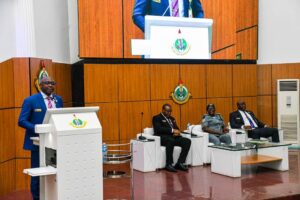
The Deputy Comptroller-General of Customs in charge of ICT and Modernisation, DCG Oluyomi Adebakin, made this position known on Wednesday, 11 February 2026, while representing the Comptroller-General of Customs, Adewale Adeniyi, at the National Defence College (NDC), Abuja.
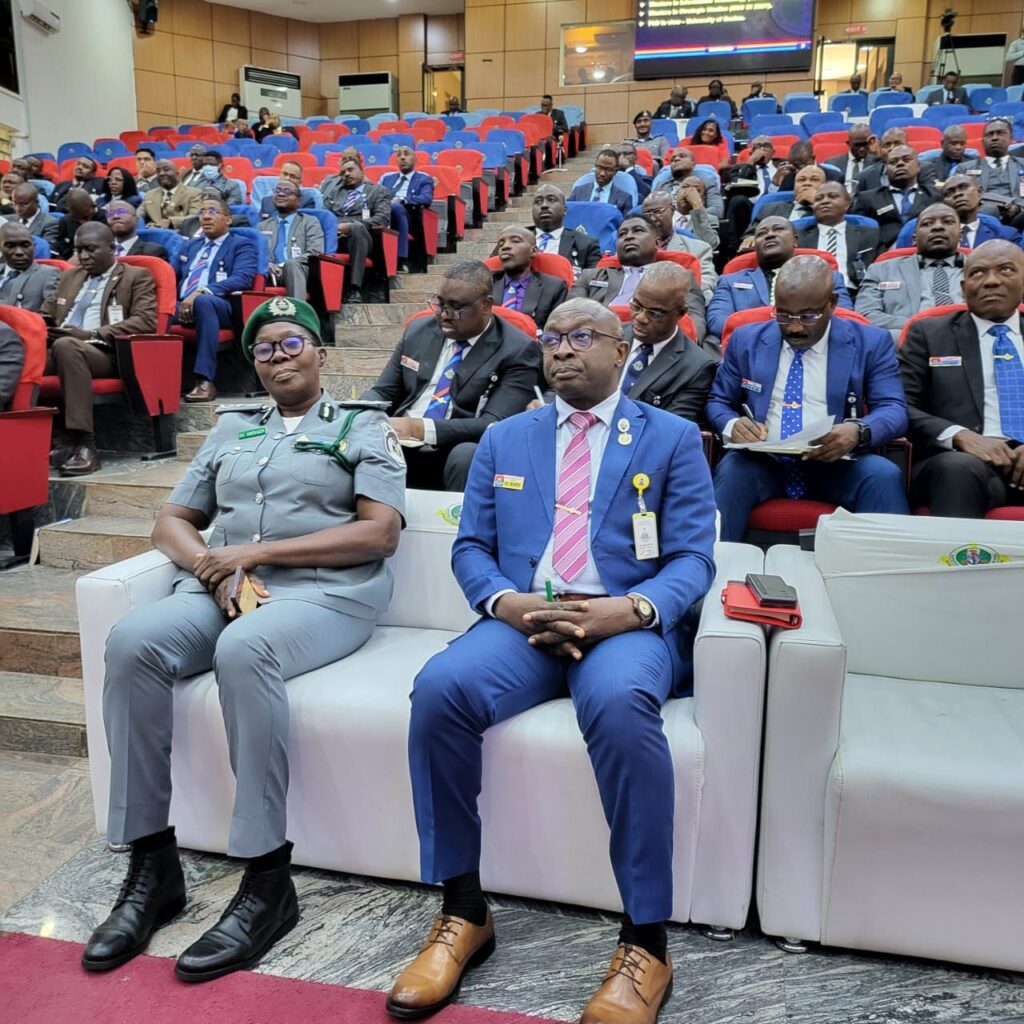
Delivering a lecture titled “Anti-Smuggling Operations and National Security in Nigeria: Nigeria Customs Service in Perspective” to participants of Course 34 undergoing the College’s 11-month programme in Strategic and Policy Studies, DCG Adebakin said the nexus between smuggling and national instability has grown more complex and dangerous.
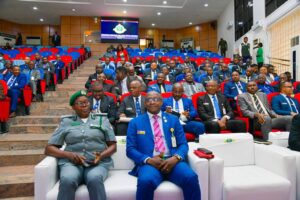
She said, “Smuggling is no longer just a fiscal offence. It is a national security threat. When arms and ammunition cross our borders undetected, when narcotics flood our communities, and when illicit financial flows fund non-state actors, the consequences go far beyond revenue loss. They threaten the stability of the Nigerian state.”
DCG Adebakin explained that Nigeria’s geographical position and expansive borders, stretching over 4,000 kilometres with nearly 1,500 illegal routes, create vulnerabilities that criminal networks exploit.
“Global estimates put the cost of transnational organised crime at about two trillion dollars annually. West Africa’s porous borders unfortunately provide a high-profit, low-risk corridor for these networks. For Nigeria, the implications are direct and immediate.” She added.
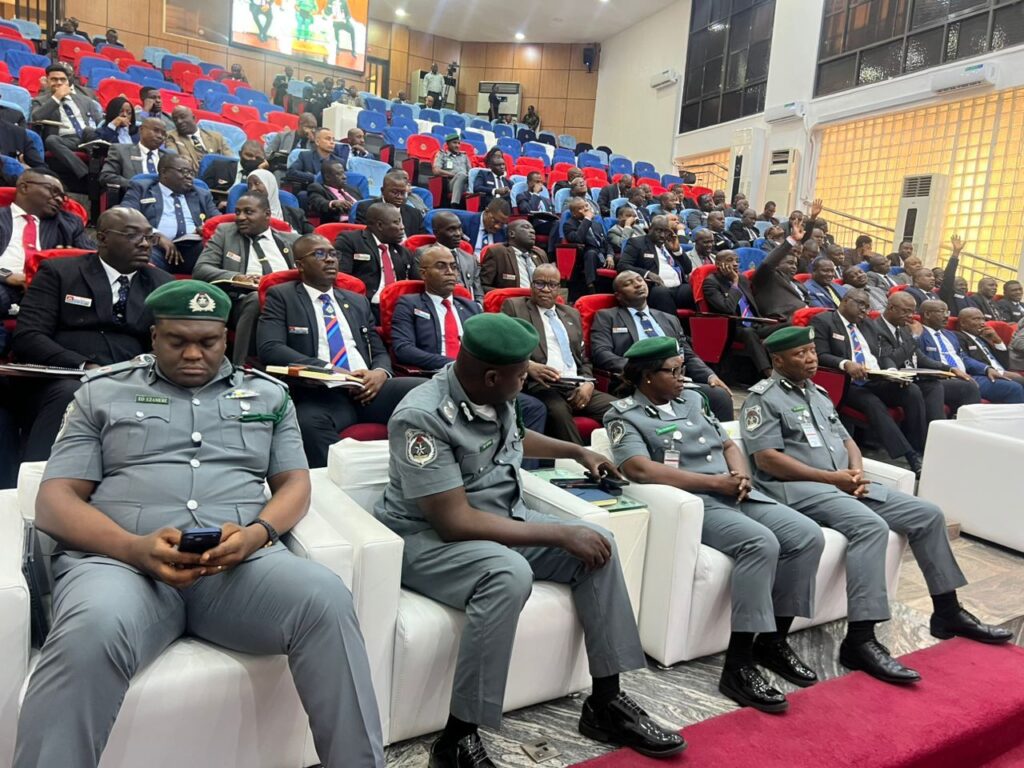
On security, DCG described what she termed the “critical nexus” as the point at which smuggling escalates into full-scale national security danger, adding, “that nexus emerges when smuggling finances terrorism through illicit oil trade; when small arms and light weapons proliferate through fragile borders; when counterfeit pharmaceuticals endanger lives; and when economic sabotage destroys local industries and fuels unemployment.”
She noted that the modern concept of national security now extends beyond military defence to include economic stability, public health, environmental safety and human welfare.
According to her, “Effective Customs enforcement protects not only government revenue but the economic and social fabric of the nation.”
Corroborating on the Service’s interceptions operations, DCG Adebakin presented detailed case studies covering arms interceptions, narcotics seizures and currency trafficking, underscoring their strategic implications.
She referenced the July 2024 Onne Port seizure of 844 rifles and 112,500 rounds of ammunition concealed in a container from Turkey.
“That single interception prevented weapons from reaching violent actors. The security value of that operation cannot be quantified in naira.” She said.
She also cited narcotics seizures at Tincan Island Port and Katsina Command, as well as cocaine interceptions aboard a Brazilian vessel at Apapa.
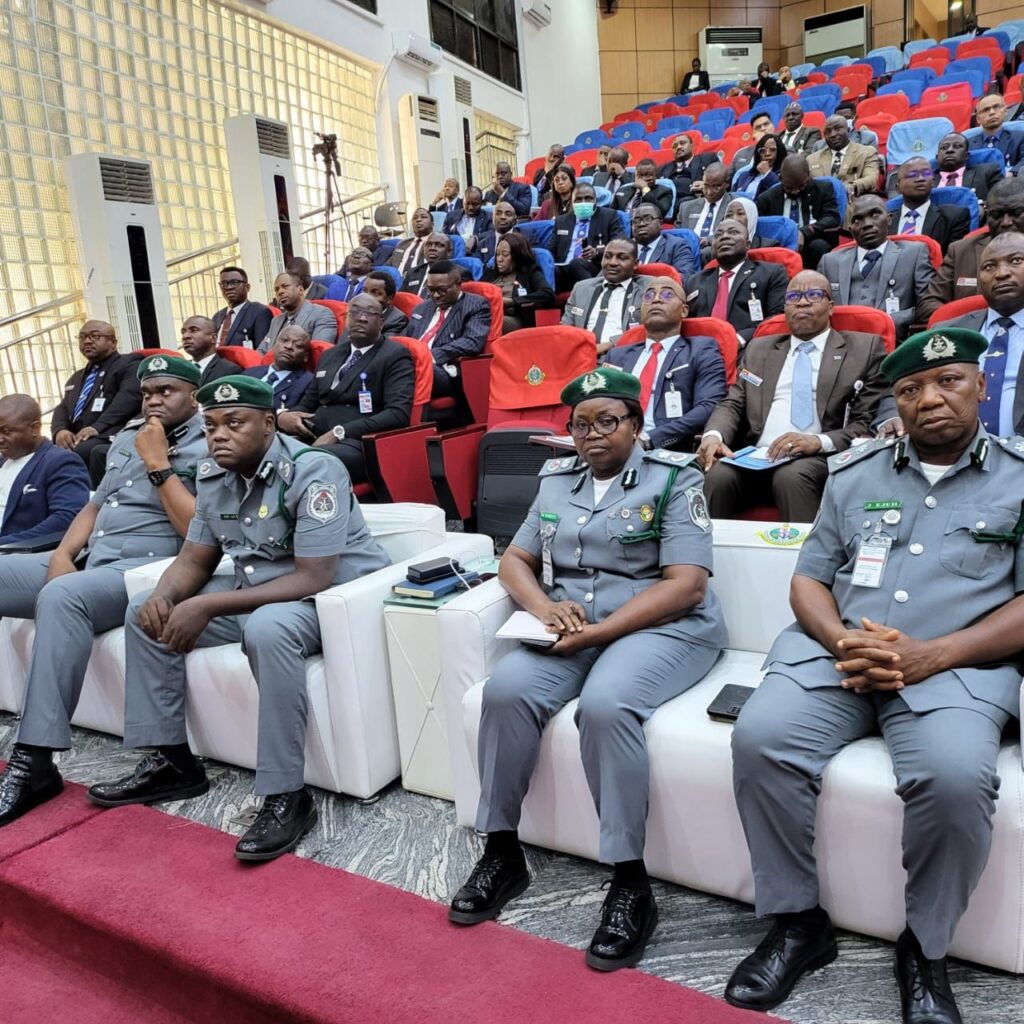
“When we intercept tramadol, codeine, cocaine or cannabis in commercial quantities, we are not just enforcing Customs law, we are disrupting criminal logistics and protecting Nigeria’s human capital.” She said.
On illicit financial flows, she pointed to recent airport seizures involving undeclared foreign currencies worth billions of naira.
“Cash smuggling sustains terrorism and organised crime. Enforcing declaration thresholds is therefore a direct intervention in terrorism financing.” She explained.
Speaking on technology and modernisation, DCG Adebakin emphasised that traditional inspection methods alone can no longer address evolving smuggling techniques.
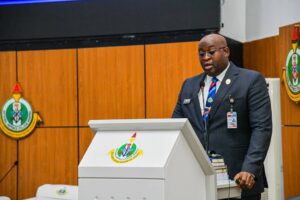
“Smuggling networks are adaptive, technologically savvy and profit-driven. They exploit encrypted communications, misdeclaration schemes and digital payment systems. Customs enforcement must therefore be intelligence-led and technology-enabled.” She said.
She highlighted the Nigeria Customs Service Act 2023 as a major legal reform, describing it as a modern framework that strengthens enforcement powers and penalties.
She further referenced the ongoing Trade Modernisation Project and the Unified Customs Management System, known as B’Odogwu.
“The transition to digital, paperless Customs administration reduces discretion, enhances transparency and improves risk management. Automation is no longer optional, and it is indispensable to national security.” She said.
Addressing operational constraints, DCG Adebakin spoke frankly about manpower limitations, logistics gaps and community dynamics in border regions.
“With less than 18,000 personnel covering vast terrain, enforcement remains challenging. Smuggling syndicates also exploit socio-economic vulnerabilities in border communities.” She noted.
She advocated drone deployment, satellite imagery, enhanced mobility, full modernisation rollout and deeper inter-agency collaboration as strategic responses.
“No single agency can manage contemporary security threats alone. Security governance demands coordinated networks involving Customs, the Armed Forces, Police, NDLEA and international partners.” She said.
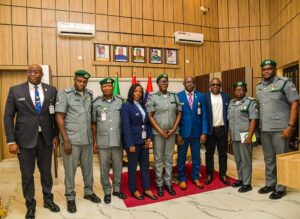
Responding, Major General Ukandu commended the Nigeria Customs Service for what he described as its “critical and often understated role” in protecting Nigeria’s borders.
“The interception of IED components, small arms and narcotics directly supports the fight against insurgency and organised crime,” he said while presenting a commemorative plaque to DCG Adebakin on behalf of the College.
He noted that border control effectiveness has direct implications for internal stability and regional security within the Sahel.
Two senior officers of the Nigeria Customs Service participating in Course 34; Deputy Comptroller of Customs Olisa Alumanah and Deputy Comptroller Jecinta Omonija, were also present at the lecture.

